March 25, 2026
Shutters vs. blinds vs. shades: an honest comparison for Orange County homeowners
By Dave Harris — Co-founder, Golden West Shutters
The question that comes up at every consultation
At some point in almost every free estimate, a homeowner asks some version of the same question: are shutters actually worth it, or would blinds or shades do the same job for less money?
It is a fair question. All three options cover a window. All three provide some level of privacy and light control. And the price difference between a budget set of blinds and a custom set of shutters is real.
The honest answer is that they are not doing the same job. They look different, perform differently over years of use, and fit different rooms and priorities. Whether shutters are worth the investment depends entirely on what you need from a window treatment and how long you plan to live with your choice.
This comparison covers each option without cheerleading for any of them.
A quick definition of each
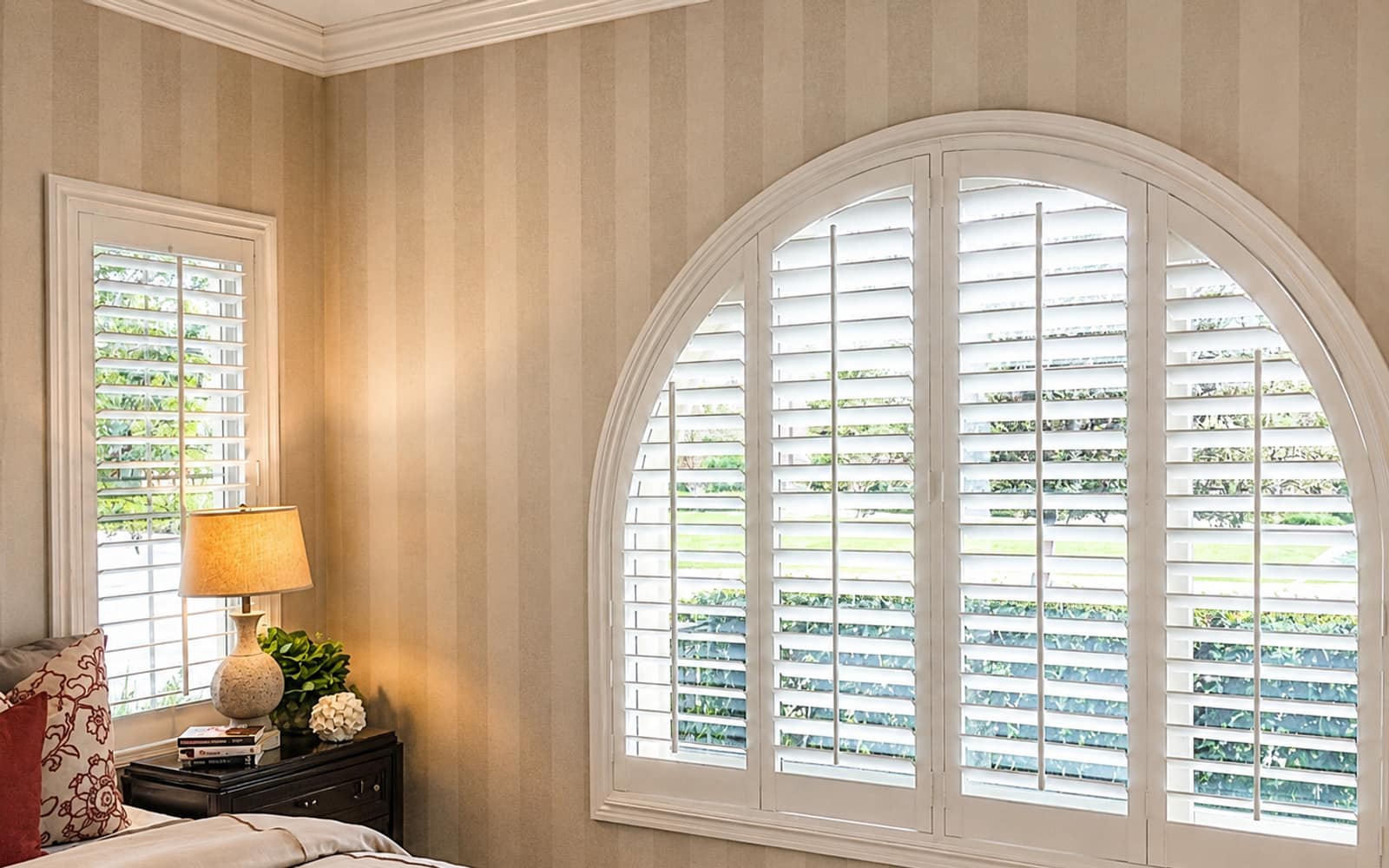
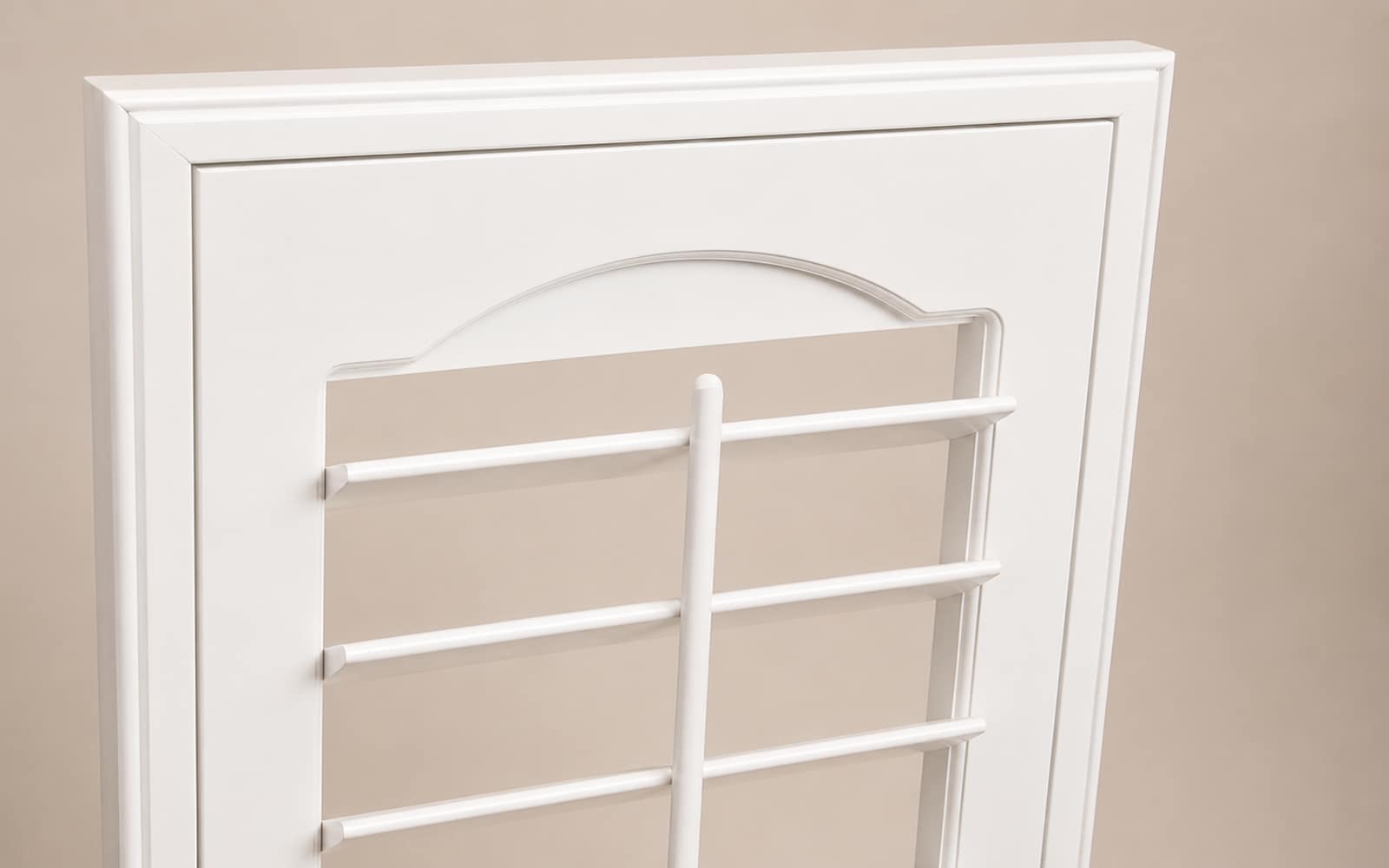
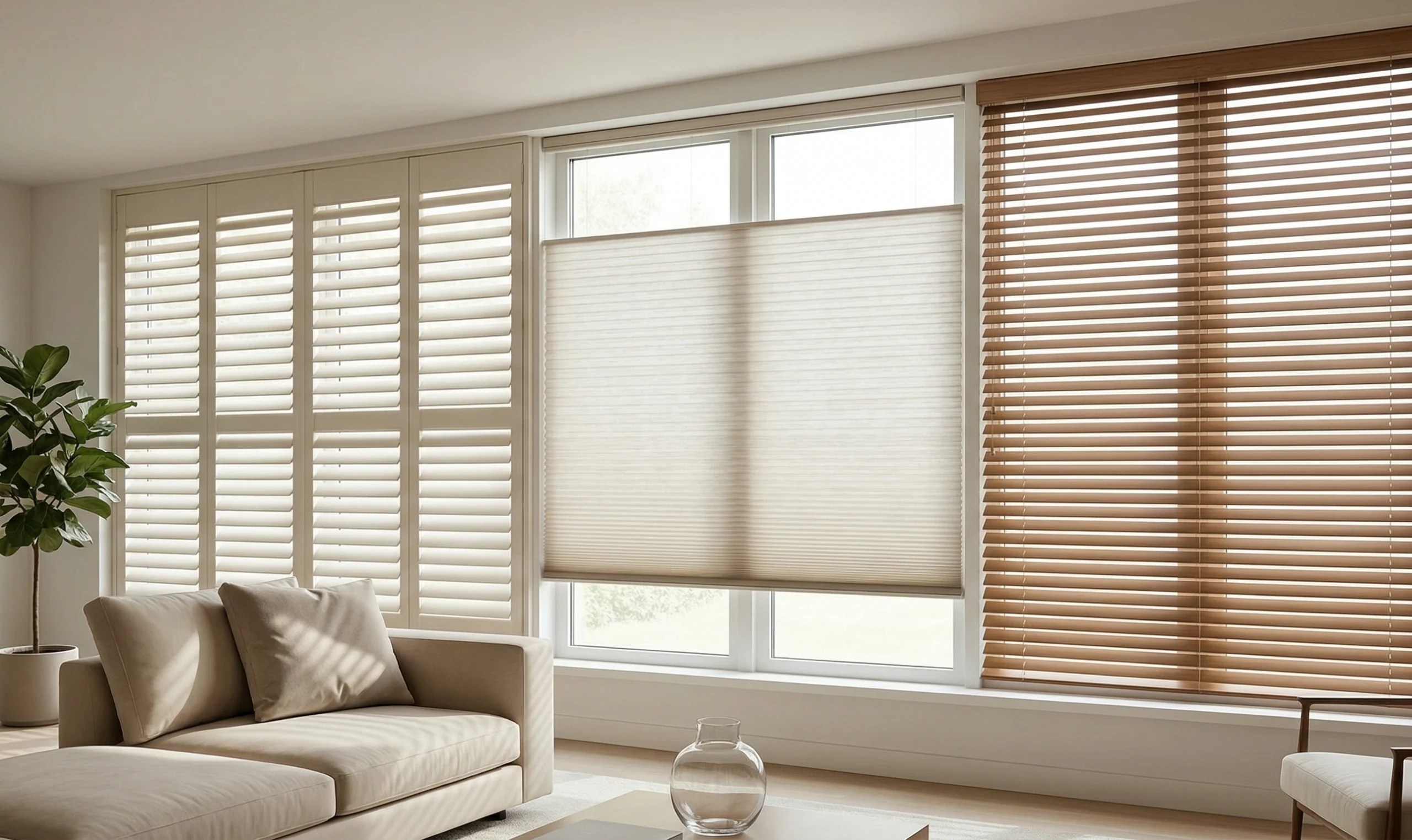
Shutters are rigid panels with adjustable louvers, installed directly onto or into the window frame. They are a permanent architectural feature of the room. Plantation shutters are the most common type in residential homes — wide-louvered, painted or stained, and custom-built to fit each window.
Blinds are horizontal or vertical slats — usually aluminum, faux wood, or real wood — suspended on cords or a rail system. They can be raised, lowered, or tilted. They are not attached to the window frame in a structural way.
Shades are made from a single piece of soft material — fabric, cellular honeycomb, or woven grass — that rolls, folds, or stacks as it is raised and lowered. They are the softest and most fabric-forward of the three options.
Light control
This is where the differences become most practical.
Shutters give you the most precise, repeatable light control of the three options. You tilt the louvers to direct light toward the ceiling or the floor, block it completely when closed, or open the panels entirely to let in full light. The adjustment is immediate and does not require pulling cords or touching fabric.
For a home office with afternoon glare, a bedroom where you want blackout at night and soft morning light, or a living room bay window where you want to control both privacy and brightness independently — shutters handle all of these with a simple louver adjustment.
Blinds also tilt and raise, but the cord and slat mechanism wears out over time. The tilt on aluminum or faux wood blinds tends to get sloppy after a few years, meaning the slats no longer sit at a consistent angle and light leaks through unevenly. Wood blinds hold up better but still rely on cords that eventually fray or snap.
Shades are generally all-or-nothing in terms of light control. A roller shade is either down or up. Cellular shades filter light softly but do not give you directional control. Woven wood shades look beautiful but let in light through the weave regardless of position. The exception is a dual-shade system with separate blackout and light-filtering layers, which gives you more options but adds cost and complexity.
Privacy
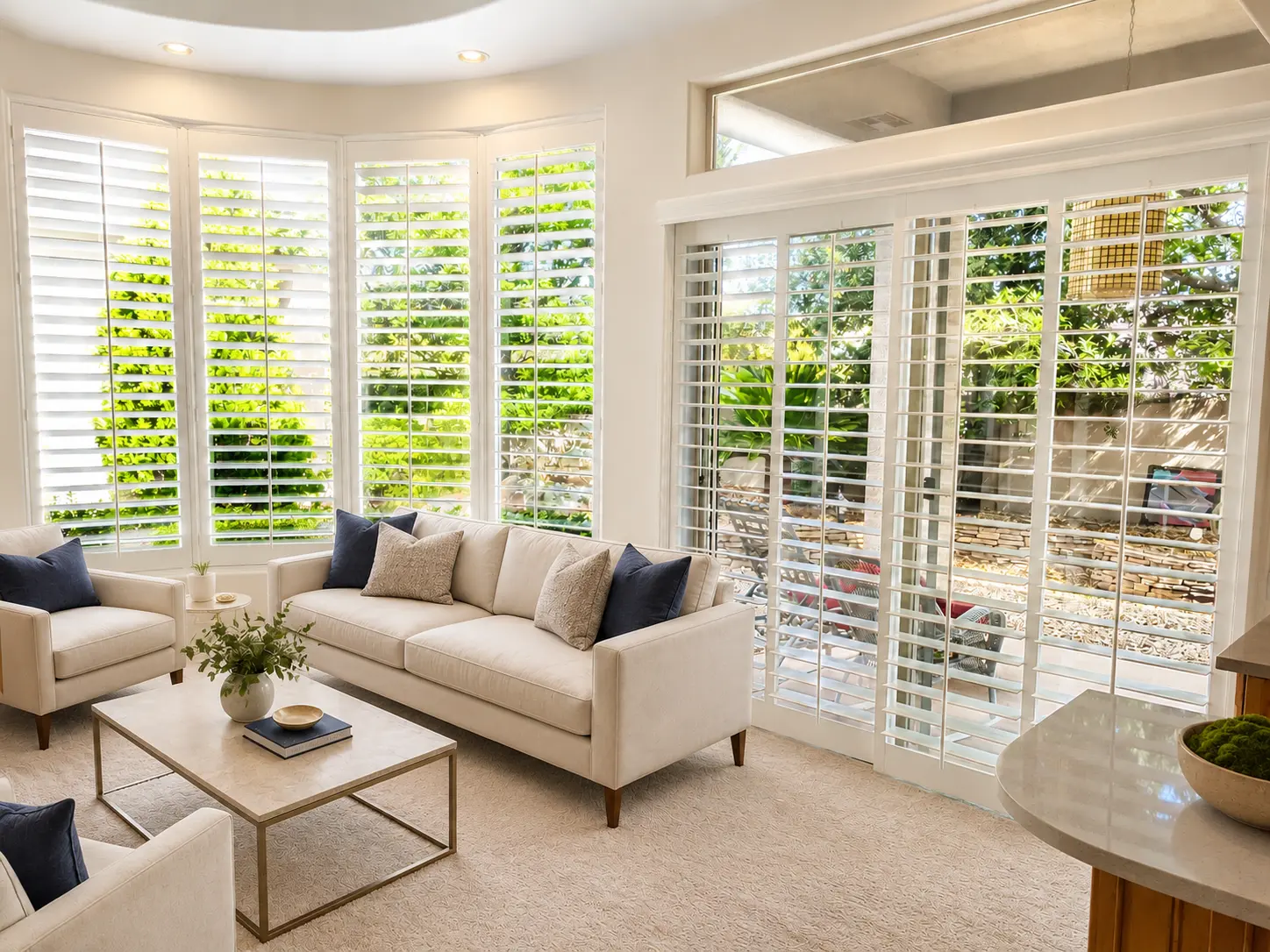
Shutters give you privacy without darkness. With the louvers angled upward at about 45 degrees, someone at eye level outside cannot see into the room — but light still enters from above the louver. This balance of privacy and light is something blinds and shades struggle to replicate cleanly.
Blinds provide privacy when the slats are closed, but gaps between slats and the light leakage at the edges of the frame mean you are rarely fully private without fully darkening the room.
Shades vary widely. A blackout shade gives complete privacy. A light-filtering shade provides soft privacy but outlines movement and silhouettes at night when lights are on inside. A woven shade in a street-facing room at night offers almost no privacy at all.
Durability and lifespan
This is the comparison that matters most to homeowners who are thinking about long-term value rather than upfront cost.
Shutters are the longest-lasting of the three options by a significant margin. Quality shutters — whether wood or poly — typically last 20 to 25 years with basic cleaning and no mechanical parts to replace. There are no cords, no strings, no fabric to fade, and no slats to break. A shutter panel that was installed in 2005 in a well-maintained Orange County home likely still looks and functions well today.
Blinds have a shorter practical lifespan. Aluminum and faux wood blinds in a busy household — one with kids, pets, or regular use — tend to start showing wear within 3 to 5 years. Slats get bent. Cords fray. The raise-and-lower mechanism becomes stiff or stops working. Real wood blinds last longer but are susceptible to the same mechanical failures and to warping in humid rooms.
Shades depend heavily on material. A quality cellular shade can last 7 to 10 years before the fabric starts to yellow or the lifting mechanism fails. Roller shades with good hardware can last similarly. Woven and natural fiber shades are more delicate and typically have a shorter lifespan, especially in sunny rooms.
For a detailed look at how shutter materials compare over time specifically, the wood vs. composite vs. poly shutters breakdown covers that in full.
Appearance over time
Shutters age well. A painted shutter holds its color and finish for many years and can be touched up if needed. The structure does not sag, buckle, or change shape. In a room with quality finishes, shutters still look like they belong 15 years after installation.
Blinds show age. Faux wood blinds yellow under UV exposure. Aluminum blinds accumulate dust in ways that are difficult to clean thoroughly. Real wood blinds can warp or fade with prolonged sun exposure. In a sunny South Orange County home with western exposure, cheap blinds can look noticeably aged within 3 years.
Shades depend on fabric quality. High-end cellular shades in a less-exposed room can stay looking good for close to a decade. Lower-quality fabrics fade, pill, or stiffen over time. Natural fiber shades tend to show wear faster in direct sunlight.
Ease of cleaning
Shutters are the easiest to clean. A dry microfiber cloth across each louver takes a few minutes per window. There is no fabric to absorb odors, no slats that trap grease, and no mechanism that needs maintenance. For a home with kids, a dog, or a kitchen-adjacent room, this matters more than it might seem upfront.
Blinds are harder to clean thoroughly. Each individual slat accumulates dust on both the top and underside. Aluminum blinds can be wiped but often need to be taken down and soaked to get fully clean. Faux wood blinds can warp if soaked.
Shades range from simple to difficult. Roller shades can often be spot-cleaned. Cellular shades are nearly impossible to clean thoroughly because dust collects inside the cells. Woven shades cannot get wet.
Cost: upfront vs. over time
Upfront, blinds are cheapest. A set of faux wood blinds for a standard window costs $30 to $100 at a home improvement store. Roller shades start around $50 to $150 per window installed. Custom cellular shades from a quality dealer run $150 to $400 per window depending on size.
Custom plantation shutters for a standard window in Orange County typically run $250 to $600 per window installed, depending on material and size. The full pricing breakdown for 2026 covers what to expect for different room types and project sizes.
The cost-over-time calculation changes the comparison significantly. If you replace cheap blinds twice in 10 years and pay for installation each time, the total cost often approaches — or exceeds — what quality shutters would have cost once. Shutters also add recognized value at resale in a way that blinds and most shades do not.
Which option fits which room
Shutters work best for living rooms, home offices, master bedrooms, bathrooms (poly), bay windows, and any room where light control, privacy, and long-term appearance are the priority.
Blinds work reasonably well for secondary bedrooms, rental properties, garages, or any space where budget is the primary driver and aesthetics are less important. Real wood blinds can look good in casual spaces but require more maintenance than shutters.
Shades work best for rooms where soft, filtered light is the goal and light control precision is not critical. A bedroom with cellular blackout shades is a practical choice. A living room with woven shades can look warm and natural if the privacy and light control trade-offs are acceptable.
In many homes, the right answer is a combination. Shutters on the rooms that matter most — living room, home office, master bedroom — and a simpler option for secondary spaces where performance expectations are lower.
The one question that cuts through the comparison
If you are still not sure which direction to go, ask yourself this: in five years, do you want to be replacing this, or do you want it to still look exactly the way it does on day one?
If the answer is the latter, shutters are almost certainly the right choice. They are the only option in this comparison that is genuinely designed to last the life of the home.
A free in-home consultation will help you figure out which rooms make sense for shutters, what material is right for each space, and what the total project would cost for your specific home. Schedule yours with no obligation.
Frequently asked questions
Are plantation shutters better than blinds?
For most rooms in a primary residence, yes — if you are comparing quality and longevity rather than upfront cost. Shutters last significantly longer, provide better light control, are easier to clean, and add value at resale. Blinds cost less upfront but need to be replaced more frequently and do not perform as well over time in sunny climates like South Orange County.
Do shutters block more light than blinds?
When fully closed, high-quality shutters with tight-fitting panels block light comparably to closed blinds. Where shutters have the advantage is in the middle — when you want some light but not direct glare. The louver angle on a shutter gives you more precise control over where light goes than a standard blind slat adjustment.
Are shutters worth the extra cost over blinds?
For rooms you spend meaningful time in — a home office, living room, or master bedroom — the answer is typically yes. The durability difference alone often makes the math work over a 10 to 15 year period. For a secondary bedroom or utility space, the argument is weaker and depends on your budget and priorities.
Can I mix shutters and shades in the same home?
Yes, and many homeowners do. A common approach is to use shutters on the main living areas and a quality shade in secondary bedrooms or rooms with less architectural significance. The key is keeping a consistent color palette so the home reads cohesively when you look from room to room.
Do shutters make a room look smaller?
No — if anything, the opposite. Shutters that are properly fitted to the window frame create clean vertical and horizontal lines that tend to make windows look larger and rooms feel more finished. The issue only arises if shutters are installed outside the frame with a large surrounding board that crowds the wall.
What is the difference between blinds and shutters for a bay window?
A bay window with three separate blinds hung independently looks disjointed because each blind treats its section as an isolated opening rather than part of a unified architectural feature. Shutters fitted to a bay window account for the angles between sections and create a continuous, intentional look across the whole opening. The bay window shutter guide goes into the geometry in detail.