March 25, 2026 · Updated June 2, 2026
How better window treatments cut summer cooling bills in Orange County
By Dave Harris — Co-founder, Golden West Shutters
Your summer electricity bill in Orange County is driven less by your thermostat than by your windows. Glass is a poor insulator, and the afternoon sun pours radiant heat straight through it into the room. Your air conditioner then runs longer to remove that heat.
The fix does not require new windows. The right covering, fitted correctly, blocks a real share of that heat before it reaches the room. In a home where the AC runs four to five months a year, that adds up over a summer.
This post compares how much heat common coverings actually block, which windows matter most, and where closed plantation shutters help. We are the local manufacturer, but shutters are not always the right answer, so we will keep this honest.
How heat gets into a room through glass
Most summer heat enters a room as solar heat gain. That is the sun's radiant energy passing directly through the glass and warming everything it lands on. It is the warmth you feel sitting near a sunny window, even when the room air is cool. In west- and south-facing rooms during a long Orange County summer, solar heat gain is the main problem.
There is a second path too. On a 95-degree afternoon, the glass itself gets hot and radiates that heat into the room, even after the direct sun moves off it. Window coverings work mainly by cutting solar heat gain. A covering that blocks or deflects sunlight, or sits close to the glass as a barrier, lets less radiant energy into the room. Less energy in the room means less work for the AC.
Which coverings actually block the most heat
Not every covering reduces heat gain the same way. Here is a plain look at how four common options perform on this one metric, from least to most effective in most rooms.
Faux-wood blinds reflect some sunlight when the slats are closed, but the fit is rarely tight. Heat leaks through gaps at the top, the sides, and between slats. They beat bare glass, though the gains shrink as the slats warp from heat cycling and stop sitting flat.
Cellular shades, also called honeycomb shades, are built for this. The honeycomb traps air in small pockets between the glass and the room, which slows both heat paths. Double-cell and triple-cell versions insulate better than single-cell. The catch is that they block heat only when fully closed, so you trade away your light and view while they work.
Solar roller shades use an open-weave fabric that blocks a set percentage of solar radiation while keeping some light and a view. A 1 percent openness fabric blocks more heat than a 10 percent fabric. They are genuinely effective without darkening a room, though they give less privacy at night and the fabric fades over years of OC sun.
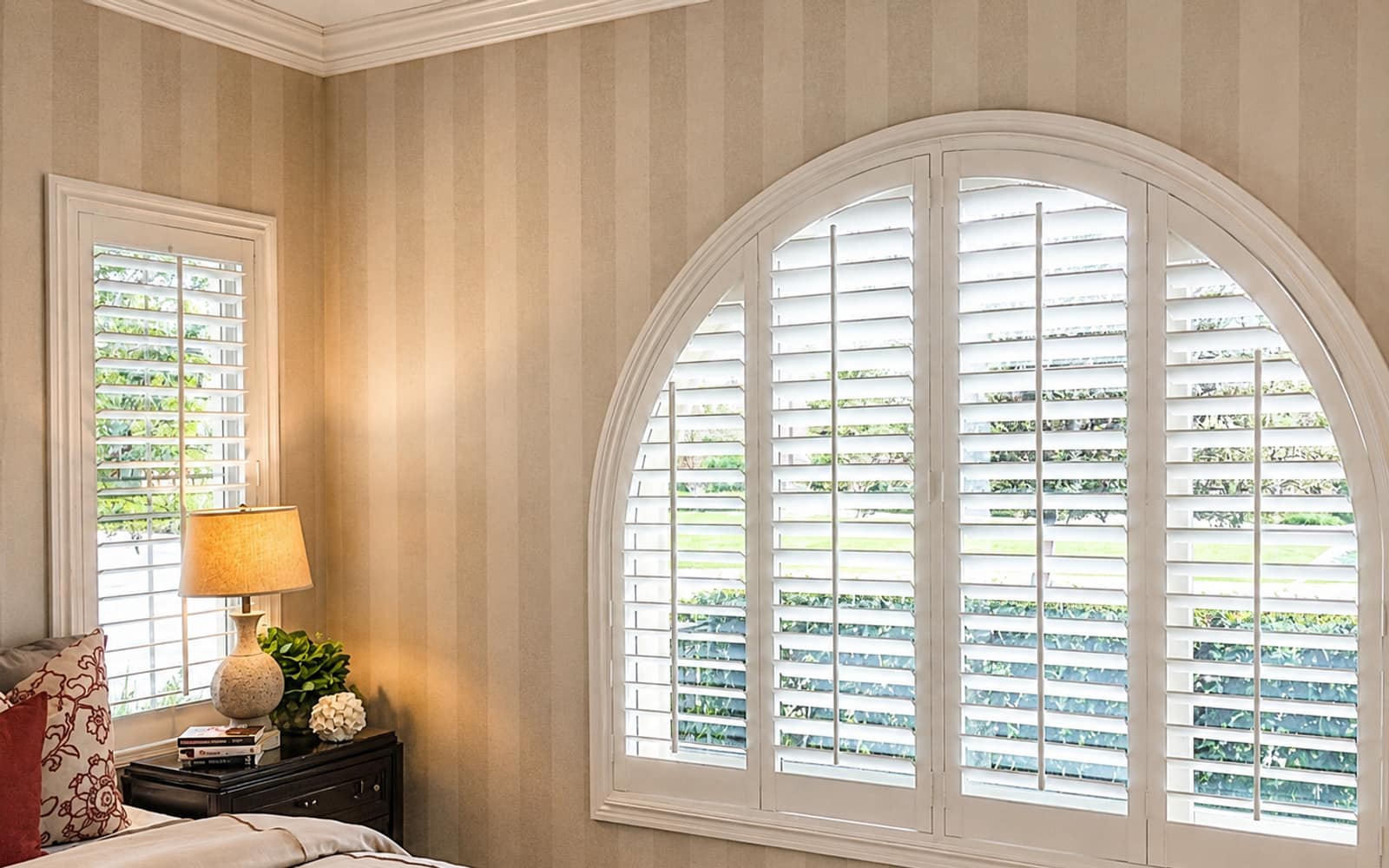
Closed plantation shutters work differently. A shut louvered panel puts a solid barrier and a trapped layer of air between the glass and the room, which slows the heat radiating off hot glass. The louver angle also lets you tilt direct sun up toward the ceiling instead of into the room, so you cut heat and still keep usable light.
Why closed shutter louvers cut radiant heat
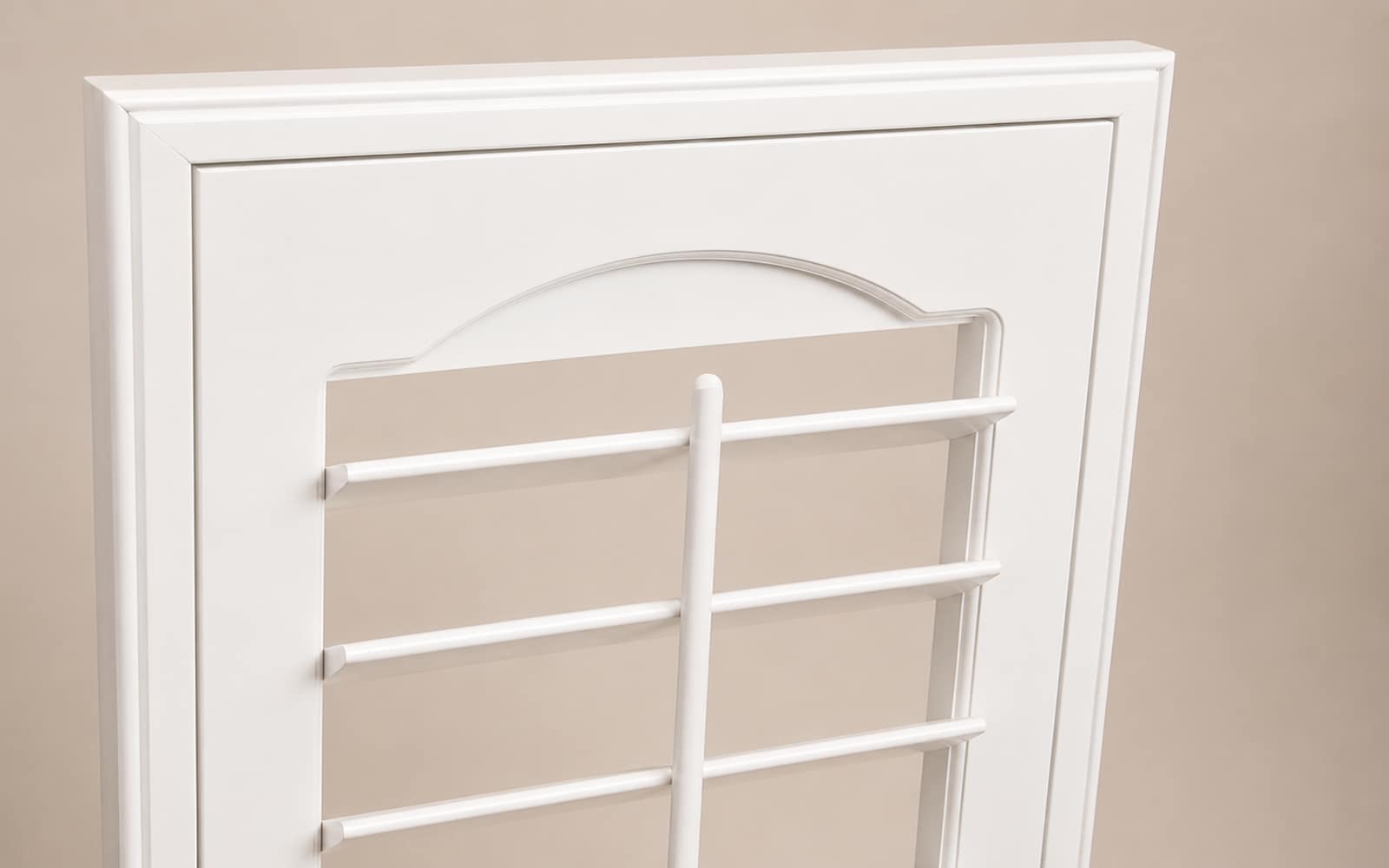
A closed shutter panel does two things at once for cooling. First, it traps a layer of air between the louvers and the glass, and that air gap slows the heat conducting off the warm window into the room. Second, the louvers reflect and deflect direct sunlight before it lands on your floor and furniture.
The angle is the part most people miss. Tilt the louvers to send direct afternoon sun upward toward the ceiling, and you cut solar heat gain while a soft light still reaches the room. That matters in a home office or living room you actually use during peak heat, because you are not forced to choose between a dark room and a hot one. It is not the same as a purpose-built cellular shade, but it is a real reduction in cooling load.
Which windows should I cover first for cooling
Start with west-facing windows. They drive the most afternoon cooling load in Orange County homes, from Mission Viejo to San Clemente. The sun hits them from about 1 PM to sunset at low angles that pour maximum radiation through the glass. A large bare west window in a living room can raise that room 10 degrees or more on a peak day.
South-facing windows come next. They take sustained sun through the middle of the day and add up over the year, though they are less brutal than west in peak afternoons. Skylights are the most efficient heat collectors of all, since overhead sun hits them with no wall angle to soften it.
East- and north-facing windows matter least for cooling. East windows warm the house in the morning before it has heated up, and north windows get almost no direct sun here. If your bill is high, address the west-facing rooms you use during the afternoon first.
What this really does to a summer bill
There is no honest way to promise a dollar figure without knowing your home, your current coverings, your AC, and how you use the place. Anyone who guarantees a number sight unseen is guessing. What the research consistently shows is that cutting solar heat gain through sunny windows cuts AC run time, and that shows up on the bill.
The biggest jump comes from going from nothing, or warped old blinds, to a well-fitted shutter or quality shade. The gap between no coverage and proper coverage is far larger than the gap between one good product and another. Two habits also help: close west-facing coverings before the sun reaches them, not after, and use shutter louvers to deflect sun upward rather than shutting them flat.
Do plantation shutters help with summer heat
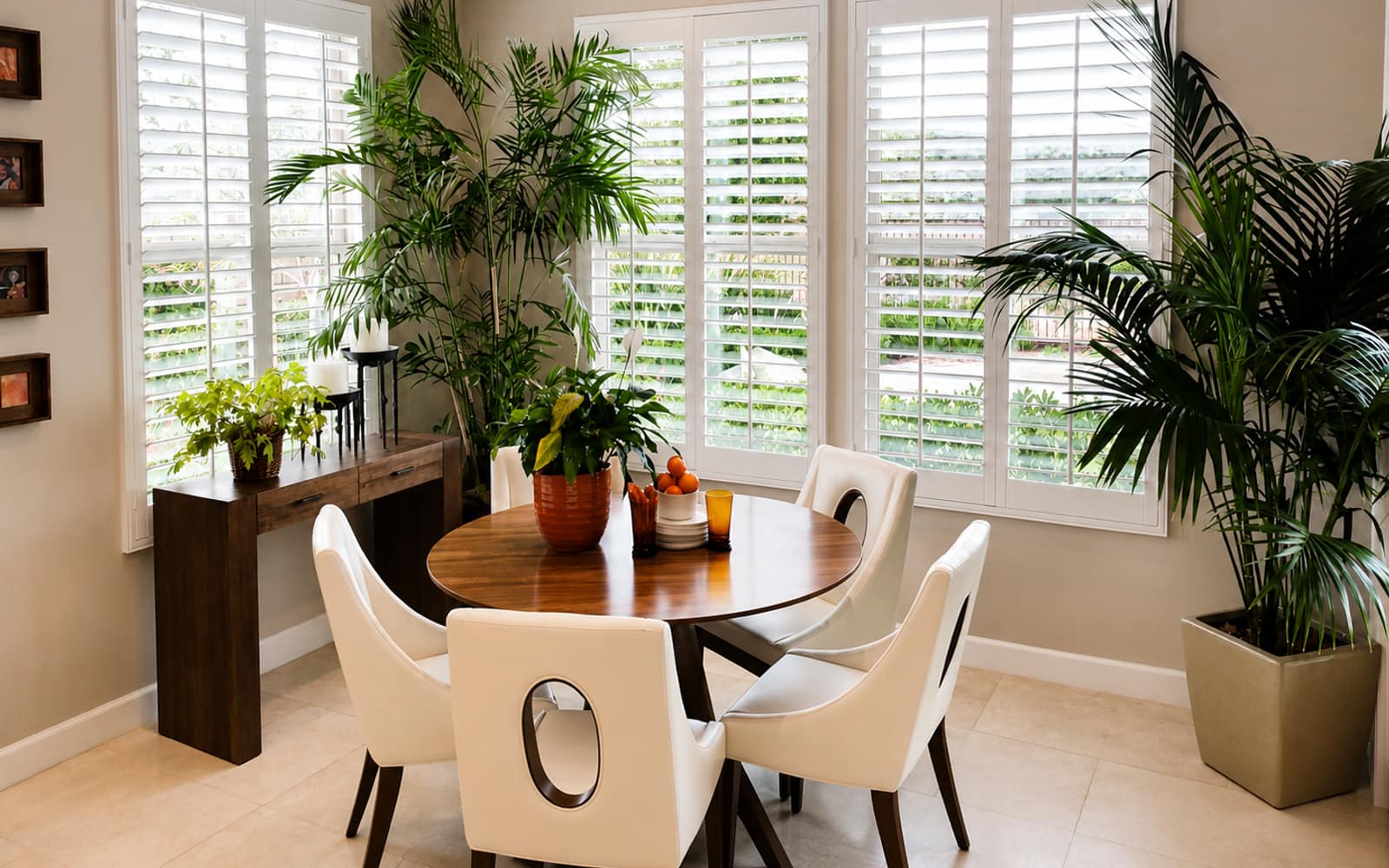
Yes, in the rooms that matter. Closed shutters create an air gap between the glass and the room that slows conductive heat, and angled louvers deflect direct sun while keeping some light. In west- and south-facing rooms that take direct afternoon sun, that meaningfully reduces the load on your AC during peak hours. The same air gap also slows heat loss on cold inland nights in winter, a smaller but real benefit here.
Shutters are not the only good answer, and for some rooms a cellular or solar shade is the better fit. Where shutters do make sense, they also last. Golden West has milled and finished shutters at our own Lake Forest factory since 1987, for more than 60,000 Orange County homes, in basswood, moisture-resistant poly, and our Polylux hybrid for large or humid windows. Every panel is built and installed by our own crew.
Where to start
Map your home by exposure before you spend anything. Find the west- and south-facing rooms you use during the hot part of the day, and treat those windows first. One large uncovered west window does more to your bill than every north window in the house combined, so prioritize by exposure, not by room.
If you want exact pricing for the specific windows where heat is costing you most, the most direct path is an in-home estimate. You get real measurements, a material recommendation for each room, and a clear project cost before you commit to anything. We make standard windows, arches, bay and bow windows, French doors, and sliders, with louver sizes of 2.5 inch, 3.5 inch, and 4.5 inch (2.5", 3.5", 4.5"). Lead time runs 3 to 5 weeks, and every shutter carries a lifetime warranty. Call Dave and John's team at 949-951-0600 or visit the Lake Forest showroom.