May 25, 2026 · Updated June 2, 2026
Hidden tilt vs front tilt rod: choosing how your shutters operate
By Dave Harris — Co-founder, Golden West Shutters
Plantation shutters come with two ways to angle the louvers, and the choice changes how the panel looks. A traditional shutter has a tilt rod running down the center of each panel. A hidden tilt has no rod at all, just a clean panel face where you nudge any louver to move them together.
The front tilt rod is the classic look, and it has been the plantation shutter standard for a long time. The hidden tilt is the modern version, and it shows up more and more in newer Orange County homes and remodels. Golden West builds both at our Lake Forest factory, so the decision comes down to your home, not what a catalog happens to stock.
This guide walks through how each one works, how they look side by side, the small tradeoffs in control and dexterity, and how to decide for your windows.
What a hidden tilt actually is
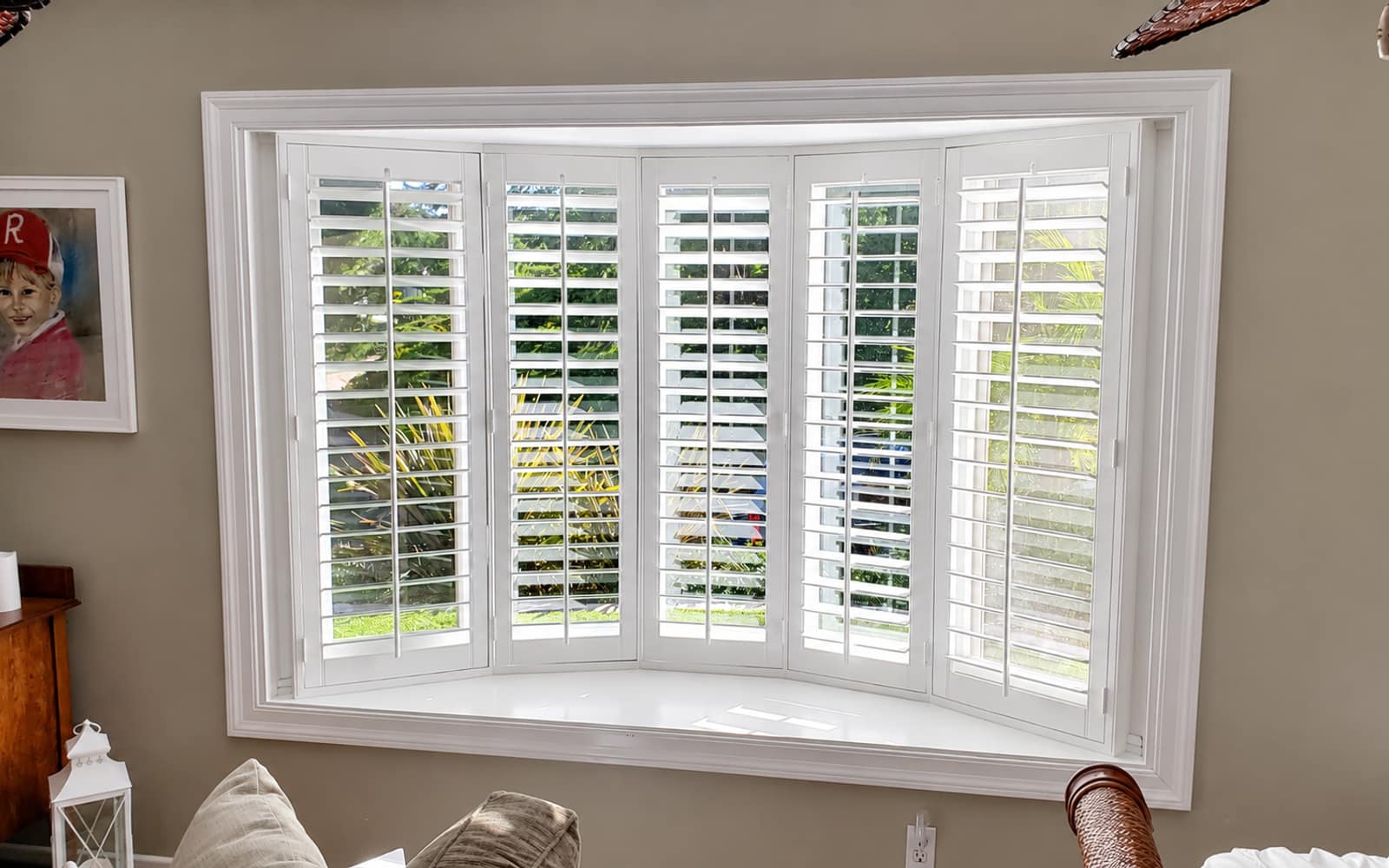
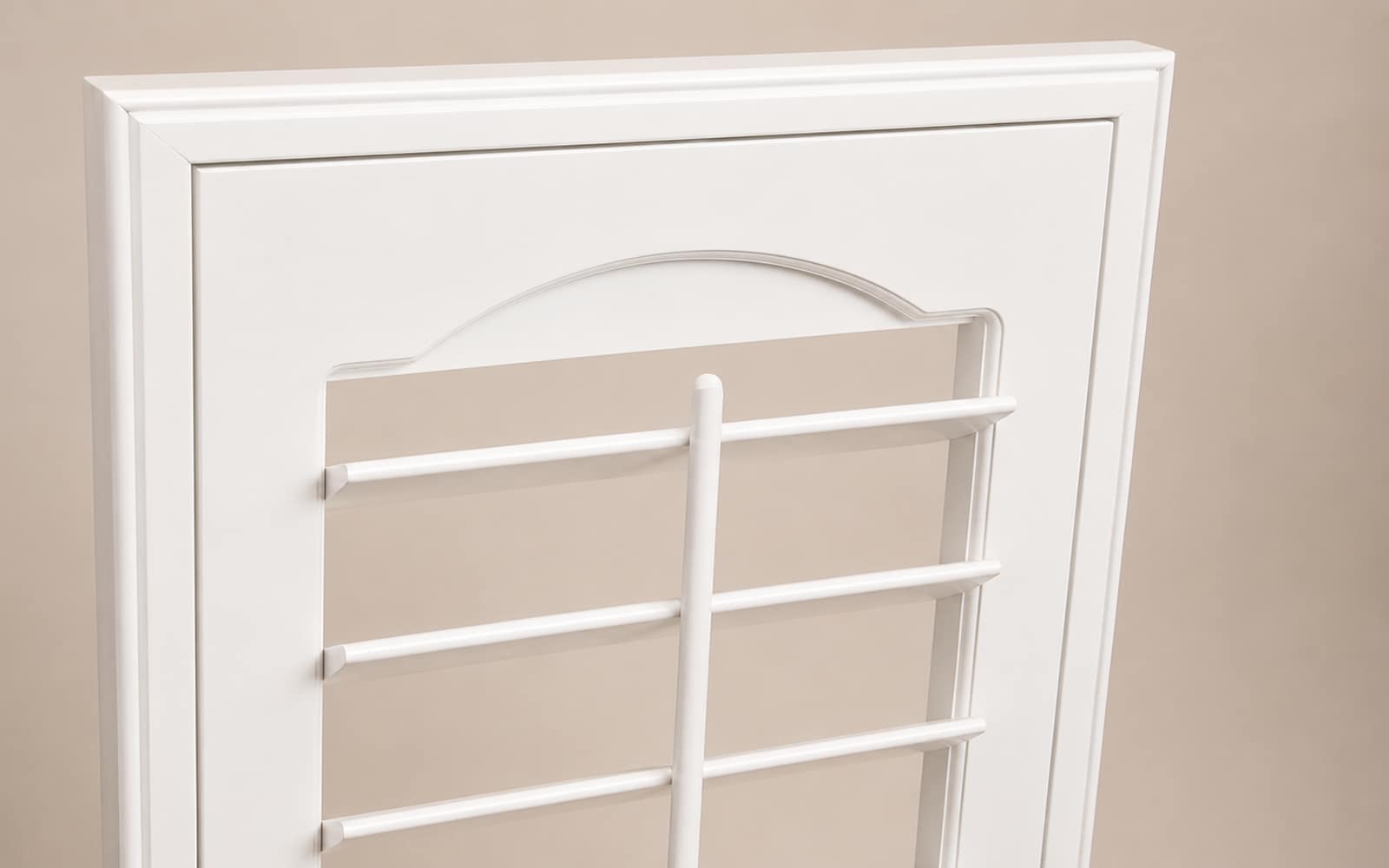
A hidden tilt moves the louvers from behind the panel instead of from the front. A traditional shutter uses a center rod connected to the front face of every louver. Push or pull the rod, and all the louvers tilt as one. The rod is simple, and it is the line most people picture when they think of plantation shutters.
A hidden tilt links the louvers from the back side, inside the panel rail. You reach up and tilt one louver directly, and the rest follow because they are connected out of sight. The panel face has nothing on it. No vertical line down the middle, no visible hardware, just louvers and frame.
How the two styles look side by side
Put a traditional shutter next to a hidden tilt in the same window and the difference is immediate. The traditional rod is a strong vertical element. It frames the louvers, breaks up the panel, and adds detail. In a craftsman, Spanish revival, or Mediterranean home, that detail belongs with the rest of the trim and millwork.
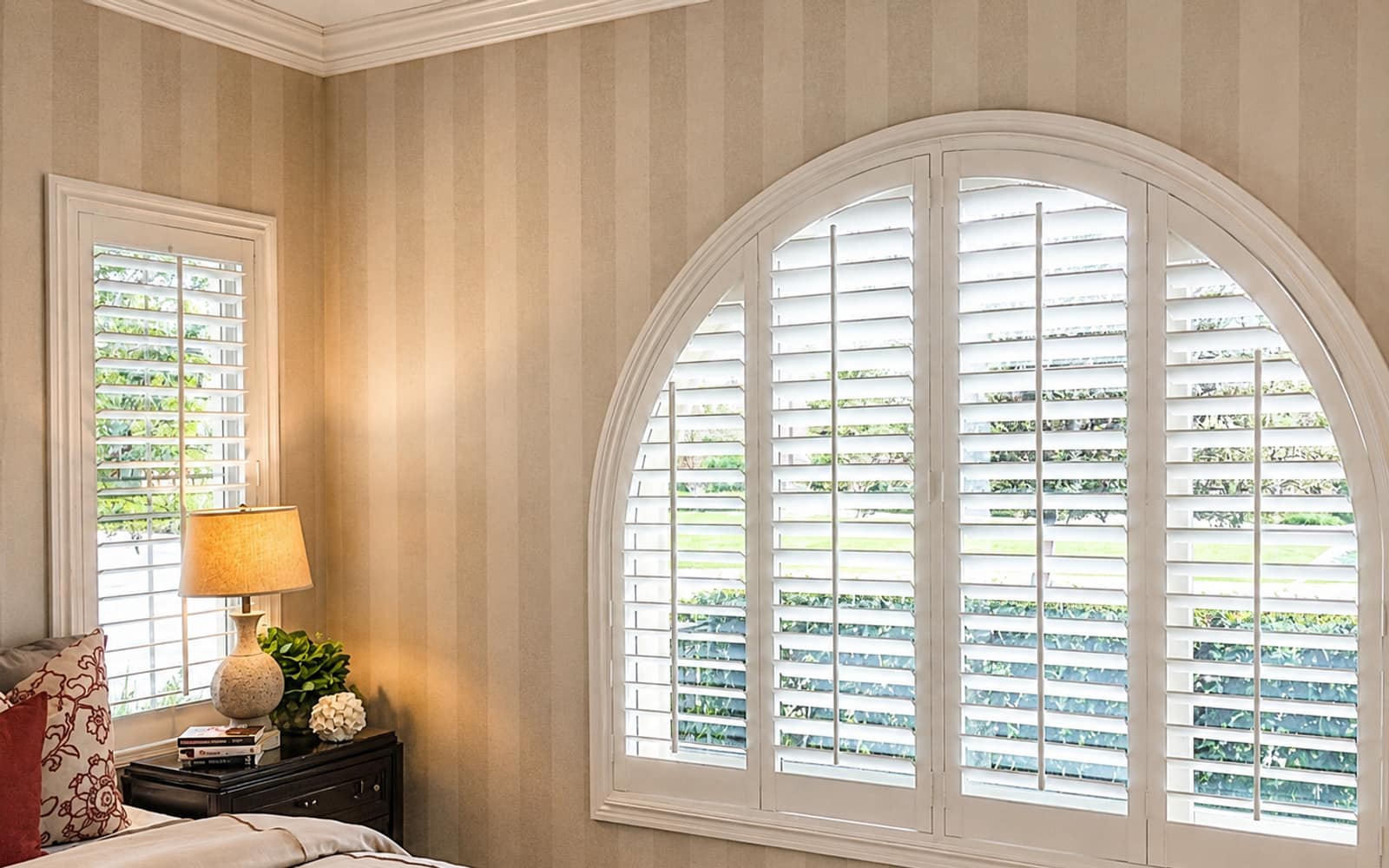
The hidden tilt reads as cleaner and more modern. With no rod down the center, the eye goes to the louvers and the horizontal lines they make. The window feels less busy. For transitional and contemporary homes around Irvine, Newport Beach, and the newer parts of Mission Viejo, the clean face usually fits the architecture better.
Does a hidden tilt work differently to operate?
Yes, and it takes a few days to get used to. With a tilt rod, you grab the rod and move it. The motion is large and obvious, and a child or an older relative can do it without bending or reaching. With a hidden tilt, you nudge any single louver and the mechanism behind the panel moves the rest.
The hidden-tilt motion is smaller and a little less obvious the first time. Most people adapt within a week, and many come to prefer it because the louvers settle exactly where you set them. The honest tradeoff is slightly less positive control than a rod, where the full-panel motion gives a firmer, more definite stop.
When a hidden tilt is the better call
Hidden tilts tend to win when the home and the window favor a clean, uninterrupted panel. They let the louvers carry the look without a rod competing for attention.
- The home is transitional, contemporary, modern, or mid-century, where a visible rod fights the clean lines
- The window is a focal point, like a bay or bow window or a large picture window, and you want the louvers to be the interest
- The room has strong horizontal lines, such as low furniture, beams, or a modern fireplace
- You want windows to photograph cleanly, which matters for homes that get listed for sale
When a front tilt rod still makes sense
Traditional tilt rods are not outdated. They remain the right choice in several common situations, and a well-built rod shutter in the right home looks better than a hidden tilt that does not fit.
- The home is traditional, craftsman, Spanish revival, or Mediterranean, where the rod matches the rest of the detailing
- Someone in the household has limited hand dexterity, arthritis, or mobility issues, since the larger rod motion is easier to manage
- You are matching shutters already installed elsewhere in the home and want them to look consistent
- You simply prefer the classic look, which is a perfectly good reason on its own
Does a hidden tilt cost more?
At Golden West, the hidden tilt is a no-cost or low-cost option on most shutters, because we mill and assemble every panel ourselves in Lake Forest. There is no reseller markup on the mechanism and no imported part to mark up twice. You pick the operation that suits the home, and the price stays close to a standard tilt-rod panel.
The thing that actually varies is how well the hidden tilt is built. A poorly made one has louvers that drift out of sync, uneven motion, or hardware that wears early. A well-made one moves as smoothly as a rod and lasts just as long, which is why we back every shutter, rod or hidden tilt, with a lifetime warranty on materials and workmanship.
How to decide for your home
Start with the architecture. Traditional, craftsman, and Mediterranean homes usually favor the rod. Transitional, contemporary, and modern homes usually favor the hidden tilt. Then look at the trim. Heavy, detailed millwork leans traditional, while clean, minimal trim leans hidden.
After that, ask who uses the shutters every day and whether you are matching existing panels. If anyone would struggle with the smaller motion, choose the rod. If half the house already has rod shutters, match them. The shutters should belong to the home rather than announce themselves.
If you are unsure, see both in person. Golden West has been the local plantation shutter manufacturer in Orange County since 1987, building shutters for more than 60,000 homes from our Lake Forest factory. Our showroom has rod and hidden-tilt examples you can operate side by side. Call Dave and John at 949-951-0600 to book a free consultation, and we will walk through both in the context of your windows. Lead time runs 3 to 5 weeks.