May 25, 2026 · Updated June 2, 2026
A 14-window whole-home shutter project in Lake Forest, room by room
By Dave Harris — Co-founder, Golden West Shutters
Most shutter content shows the finished install and stops there. What gets skipped is the decision behind each window. Why the bathroom is spec'd differently from the bedroom, why the bay window is treated as one unit, and why the whole house still reads as one job from the street.
We make every shutter at our own factory in Lake Forest, then install with our own crew. So we can walk you through a real project the way we planned it. This one was a 14-window home a few miles from our shop, eight rooms, four sun exposures, and a homeowner who wanted several specific problems solved at once.
The guiding idea was simple. Spec each room for what that room actually needs, then tie the whole house together with one louver size and one color. Material and tilt mechanism change room to room. Louver size and finish do not.
The home and the window list
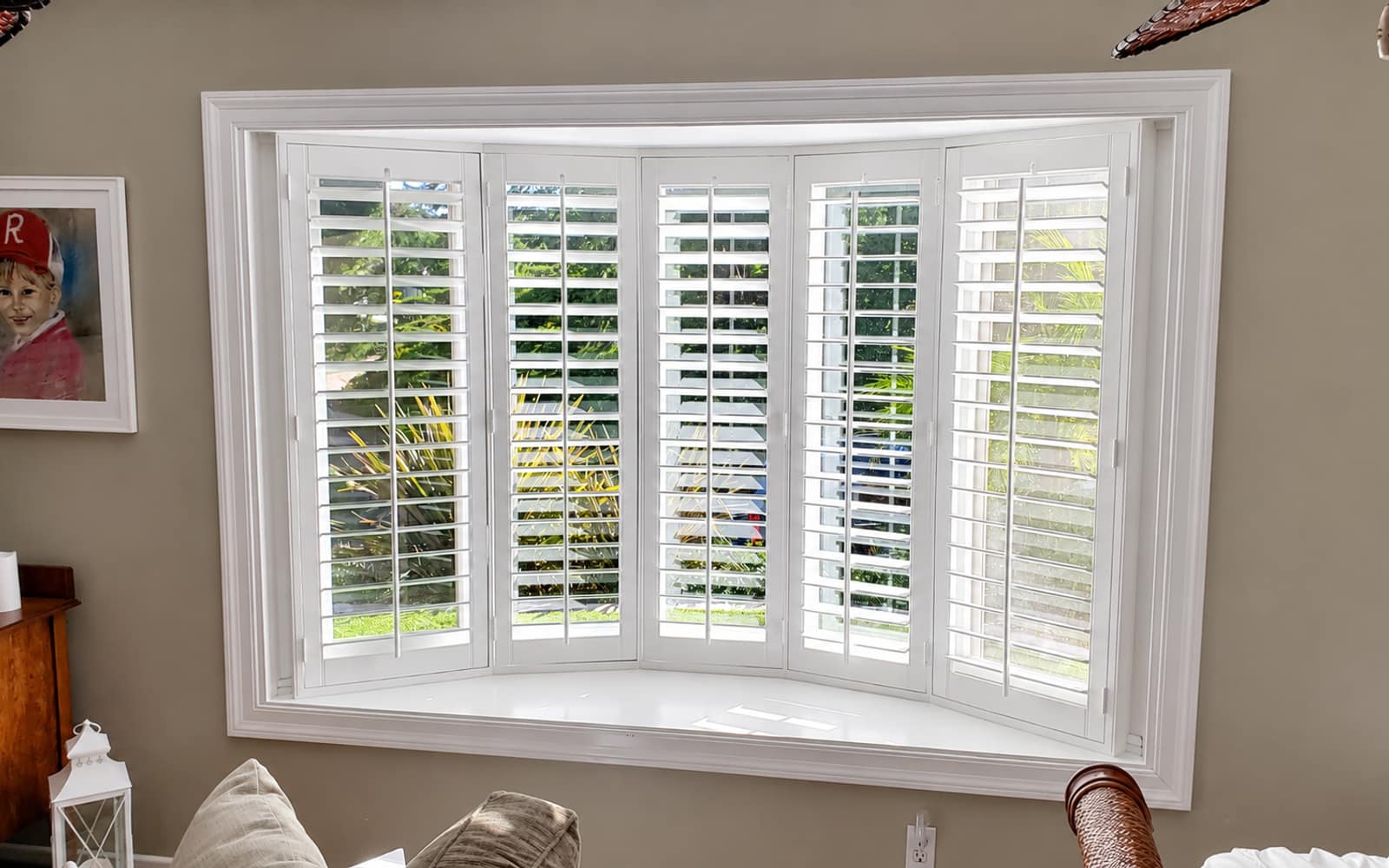
The house was about 20 years old with builder vinyl blinds throughout, several damaged. The 14 windows broke down across the living room bay plus two standard windows, a family room with two large windows and a slider, a kitchen window, two master bedroom windows, a master bath window, a west-facing home office, three more bedrooms, and a high hallway window upstairs. Four sun exposures, one bay window, and one problem window in the office.
Why not use one product on every window
The easy move on a whole-home job is to pick one shutter and repeat it everywhere. The result is uniform but wrong for half the rooms. A bathroom and a dry bedroom have different needs, and one spec cannot serve both well. The better approach is to match material to the room, then hold louver size and color constant so the house still looks like one project.
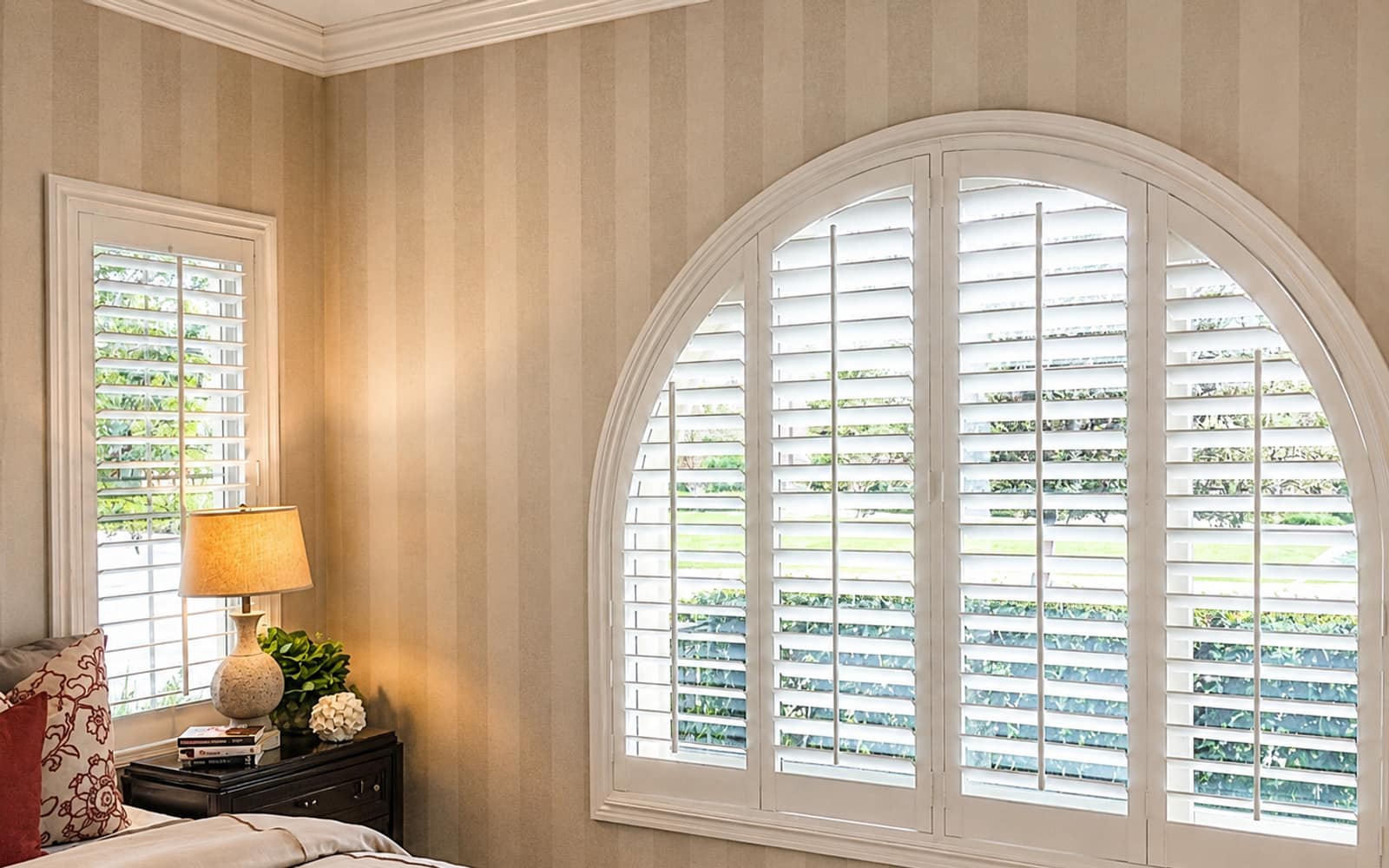
Across all 14 windows we used 3.5 inch louvers and one painted white finish. That is the thread the eye follows from room to room. Underneath that consistent look, the material shifts to fit each space.
Basswood in the dry rooms
The living spaces and bedrooms got North American basswood, our real wood shutter. The two master bedroom windows, the three other bedrooms, the family room, and the bay window all used basswood in painted white. Wood gives the warm, solid finish a homeowner wants in living and sleeping rooms, and these rooms stay dry, so warping is not a concern.
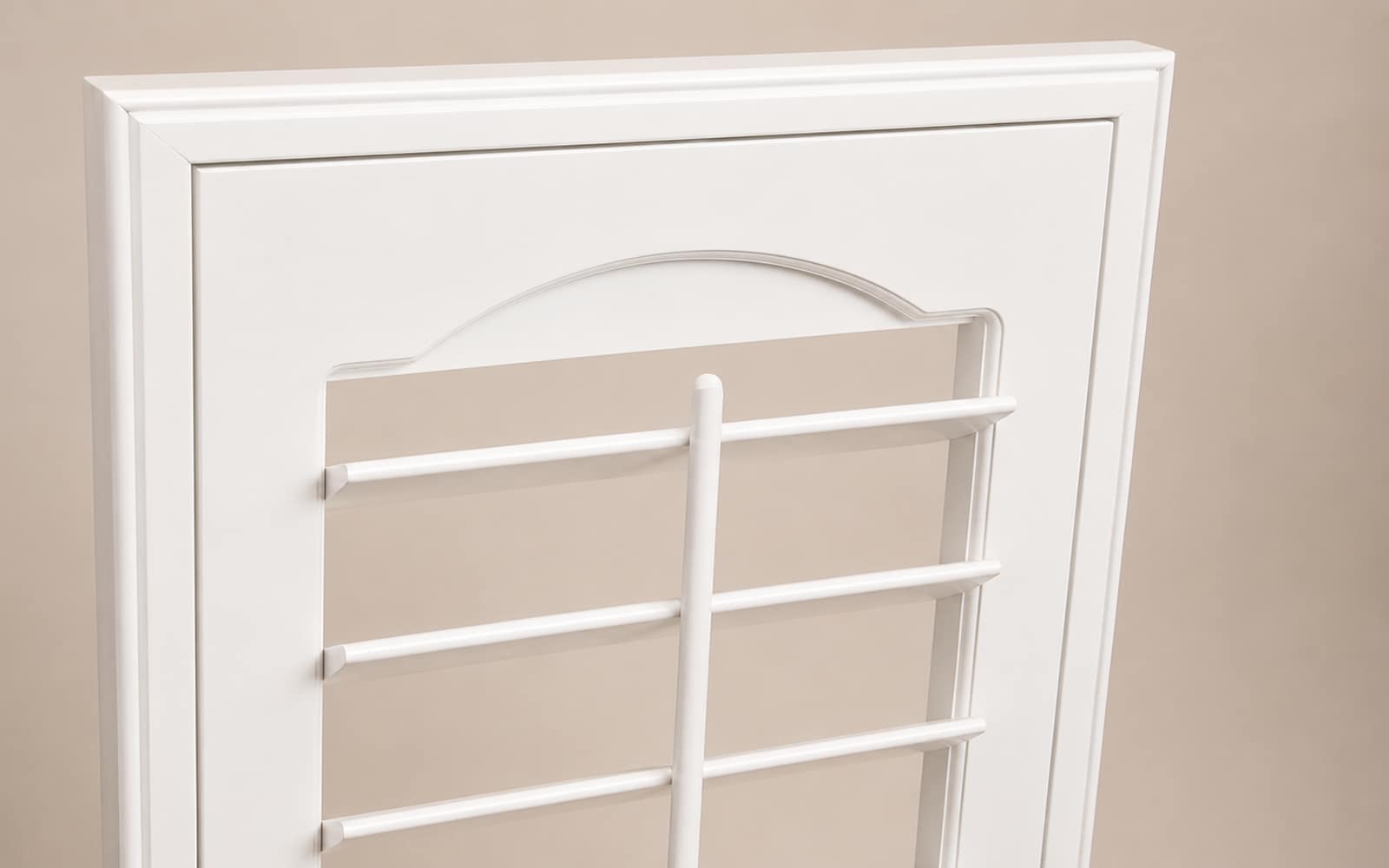
Tilt mechanism changed by room rather than by material. Hidden tilt went on the master bedroom and the bay window for a clean face. The kids' rooms got a traditional tilt rod because the kids operate the louvers themselves, and a rod is easier for small hands. Same wood, same color, different mechanism to fit the household.
Poly in the bathroom, kitchen, and hallway
The wet and high-UV rooms got moisture-resistant poly instead of wood. The master bath window, which faces the neighbor's two-story house, got poly with a split tilt so the top louvers open for daylight while the bottom stay closed for privacy. That split was the single biggest day-to-day win in the house. The north-facing kitchen window over the sink also got poly, since cooking moisture and splatter are hard on wood over years.
The small high hallway window got motorized poly with a remote. Before, the homeowner needed a step stool, so the window never got used. Poly suited it because the window sits under direct skylight and takes more UV than a side window would.
The west-facing office, the room that started it all
The home office triggered the whole project. The homeowner works from home and afternoon glare on her screen during video calls was a daily problem. West-facing windows in Orange County take a hard hit from afternoon sun, so the spec had to handle heat, UV, and glare. We used painted basswood with 3.5 inch louvers, which give precise tilt for redirecting light up toward the ceiling, and added a blackout shade behind for the worst hours.
The same orientation thinking shaped the east-facing master bedroom window, where a blackout cellular shade sits behind the shutter for true darkness at sunrise. Shutters alone do not blackout a room. The shade does that work, and the shutter handles everything else.
Should you do the whole home at once or phase it
For a unified look, doing the whole home in one batch usually wins on both cohesion and total cost. The homeowner first planned to phase the job over two years, starting with the master suite. Phasing saves cash up front but tends to cost more overall, because each phase carries its own consultation and trip costs. The bigger risk is color. White finishes drift slightly between production runs, so a window installed now may not match one installed eighteen months later.
She chose to do all 14 windows in one project. The savings on consolidated visits offset most of the cash-flow benefit of phasing, and the color match across every window is exact because they all came from one run at our factory.
How long the project took
From approved quote to install, the timeline ran inside our standard 3 to 5 weeks. We mill and finish in Lake Forest, so we are not waiting on an importer or a reseller. Installation finished in a single day with our own crew. The office became usable for afternoon calls, the bathroom went from dark to bright and private, and the bay window finally read as one architectural feature instead of three disjointed blinds.
What a whole-home buyer should think about
If you are planning a whole-home project, a few decisions carry most of the result. Spec each room for what it needs rather than repeating one product. Hold louver size and color constant so the house reads as one job. Match the tilt mechanism to the architecture and the people who use the room. Add a secondary shade where light control demands it, like bedrooms and west-facing rooms. And do the full house in one phase when cohesion matters and budget allows.
Golden West has built shutters for more than 60,000 Orange County homes since 1987, and we are the only local plantation shutter manufacturer in the county. If you want this kind of room-by-room plan for your own house, Dave and John's team can map every window and put it in writing. Call the Lake Forest showroom at 949-951-0600 to set up a free in-home consultation. Every shutter we make carries a lifetime warranty on materials and workmanship.