May 25, 2026 · Updated October 2, 2026
Do wood shutters warp in bathrooms? Usually not. Here is what actually does
By Dave Harris — Co-founder, Golden West Shutters
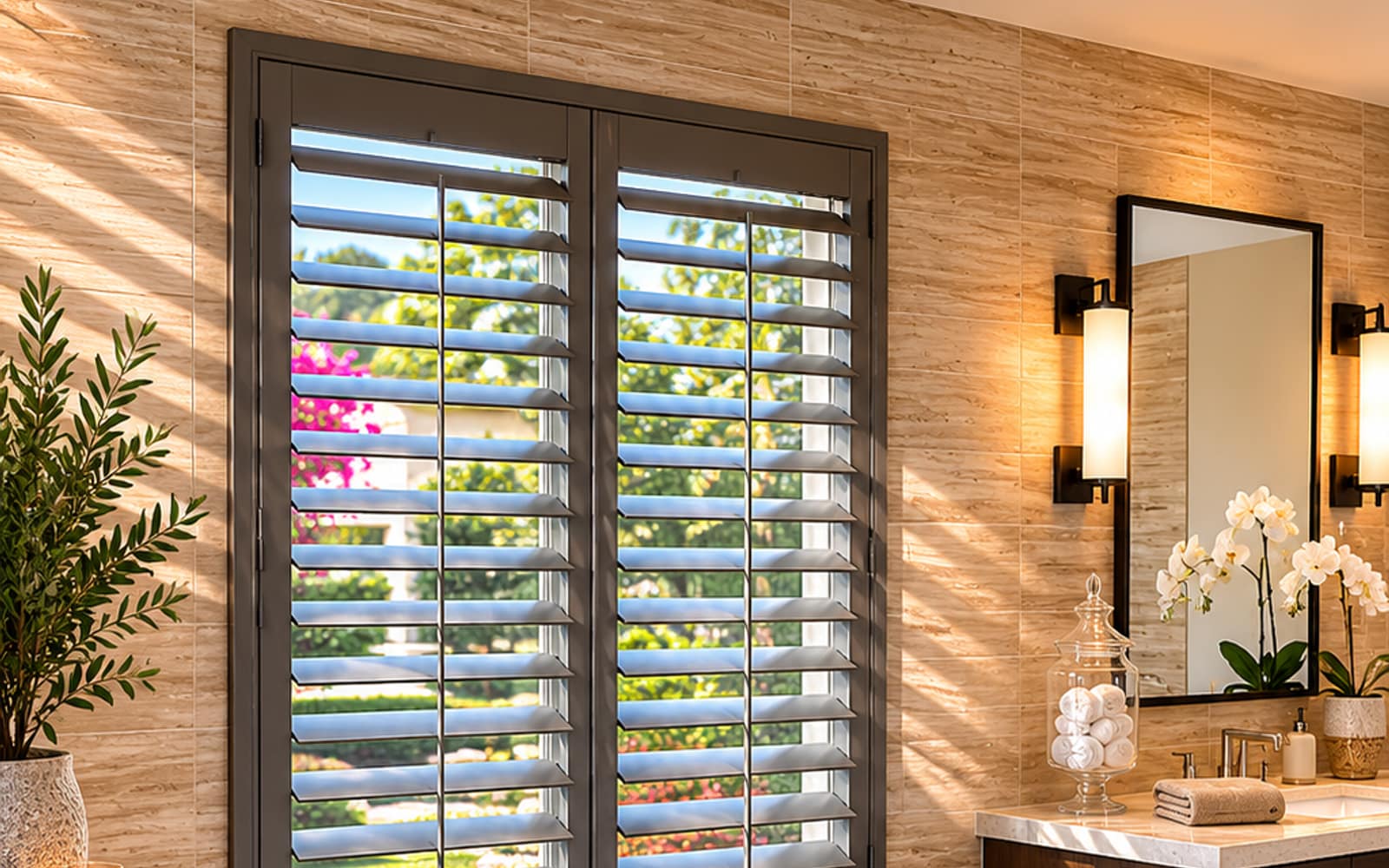
Usually not. Contrary to what most people think, everyday shower humidity has no real effect on a quality wood shutter with a furniture-grade finish. What damages a bathroom shutter is direct water and a weak finish, not steam in the air.
Golden West is the local plantation shutter manufacturer in Orange County. We mill, finish, and install every shutter from our own factory in Lake Forest, so we see what holds up and what fails. Here is the real answer to the bathroom question, when poly actually makes sense, and how to spec a bathroom shutter that lasts.
Do wood shutters warp in bathrooms?
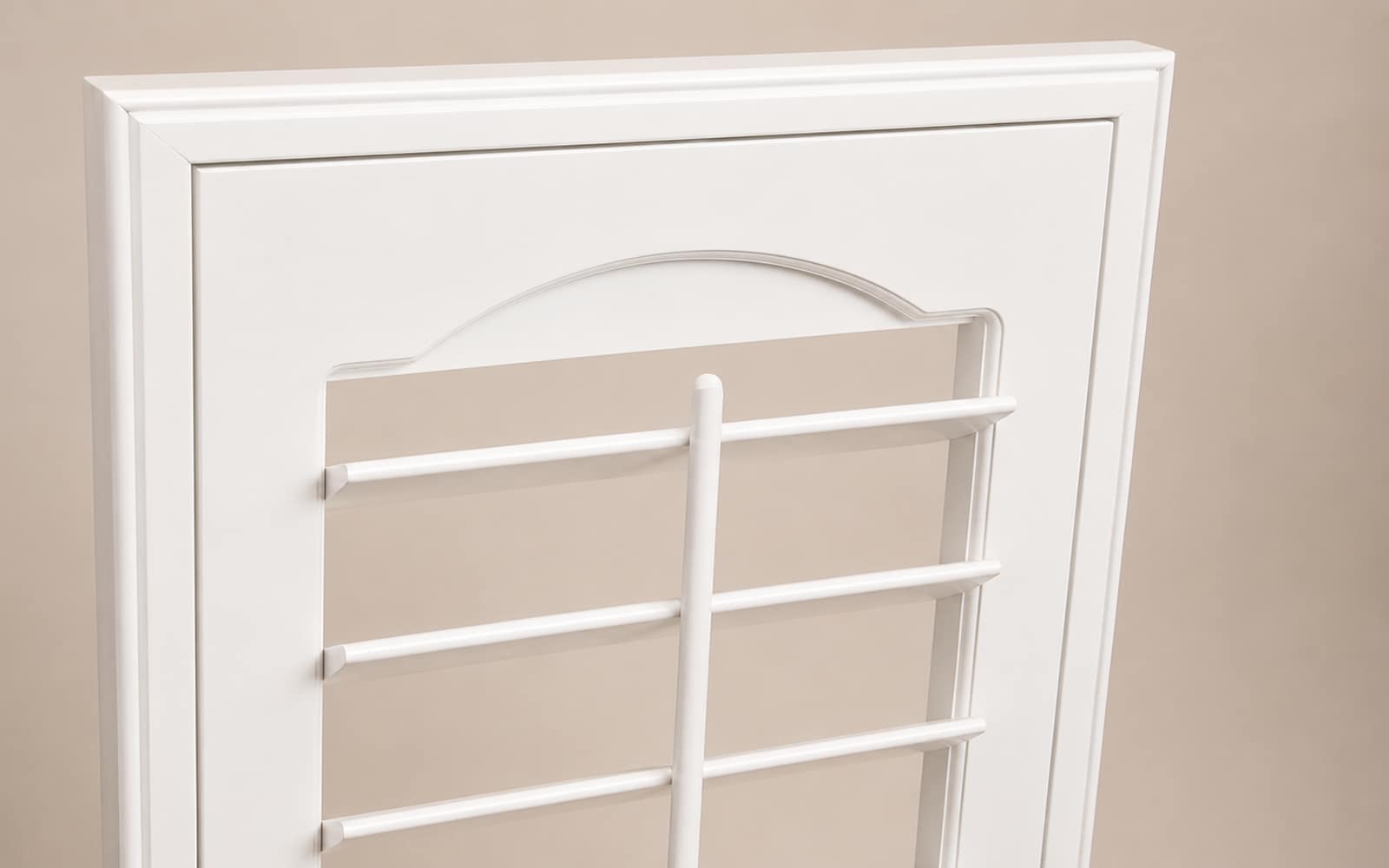
Not in a normal bathroom. Your vanity, baseboards, door, and trim are all wood, and they live in the same air as your shutters every day without warping. A well-built wood shutter is no different. Our basswood shutters get a multi-coat, furniture-grade finish that seals every face of the panel, including the edges and the back.
That sealed finish is what keeps everyday humidity out. Steam rises, the room fogs, the fan clears it, and the shutter is unaffected. Wood and poly also now cost about the same, so the bathroom decision comes down to the window, not the price.
What actually damages a bathroom shutter
When we do see a bathroom shutter fail, one of a few things is almost always behind it:
- Direct water on the panel. A window right beside the shower or tub that gets hit with spray every day.
- A window left open to the rain, or salt air and ocean spray on a beach-facing bathroom window.
- A thin or incomplete finish. Cheaper imported shutters often leave edges and backs unsealed, which is where moisture gets in.
- A small, enclosed room with no working exhaust fan, where moisture sits on every surface for hours.
Notice what is not on the list: normal shower steam in a ventilated bathroom. That is the myth, and it leads many homeowners to give up the wood look in rooms where wood would have been fine.
When poly makes sense in a bathroom
Poly earns its place where water reaches the window itself. Our poly is extruded polyurethane reinforced with aluminum. It does not absorb moisture, so it holds its shape and finish even when it gets wet regularly. Choose poly for:
- A window that takes direct spray from a shower or tub.
- A bathroom window that is often left open, rain or shine.
- Beach homes where salt air and ocean spray reach the bathroom window.
- Rental homes, where you cannot control how the room is used.
For a large bathroom window where you want the wood look with extra protection, our Polylux hybrid pairs a real wood frame with moisture-resistant louvers.
How to spec a bathroom shutter that lasts
Start with where the window sits and whether water reaches it directly. For most Orange County bathrooms, finished basswood is the right call and matches the rest of the house. From there, a few specs solve the problems bathrooms tend to create.
A split tilt is the most useful configuration for a primary bathroom. The top and bottom louvers move independently, so you can open the top for daylight while the bottom stays closed for privacy. That solves the most common bathroom problem, a window facing a neighbor where you want light without exposure. The frequent mistake we see is a single-tilt shutter ordered where a split tilt would have done the job.
White finishes are the common choice because they match typical bathroom trim and hide water spotting better than dark colors. We mill 2.5 inch, 3.5 inch, and 4.5 inch louvers, and the wider sizes suit most bathroom windows. Inside mount keeps the shutter flush with the wall when depth allows, which is the cleaner result in a tight bathroom.
What a bathroom shutter costs
Wood and poly now cost about the same. For a standard bathroom window, expect $450 to $700 installed, whichever material fits your window. The 2026 plantation shutter cost guide covers every room and project size.
A consultant who pushes poly into every bathroom by default, or wood into a window that takes daily spray, is selling the wrong product. We look at each window during the free in-home consultation and spec the material that will actually hold up. Every shutter is built and finished at our Lake Forest factory, with a 3 to 5 week lead time and a lifetime warranty on materials and workmanship.
Golden West has built shutters for more than 60,000 Orange County homes since 1987, from Anaheim Hills to San Clemente, including Irvine, Newport Beach, and Mission Viejo. Dave and John are happy to walk through your bathrooms and spec the right material. Call 949-951-0600 or stop by the showroom in Lake Forest.